Buying at Auction
Buying Business Property at Auction: Things Worth Thinking About
By Raphael Ramani, Acquisition Finance Specialist · Last reviewed · 9 min read
It is also the least forgiving.
06
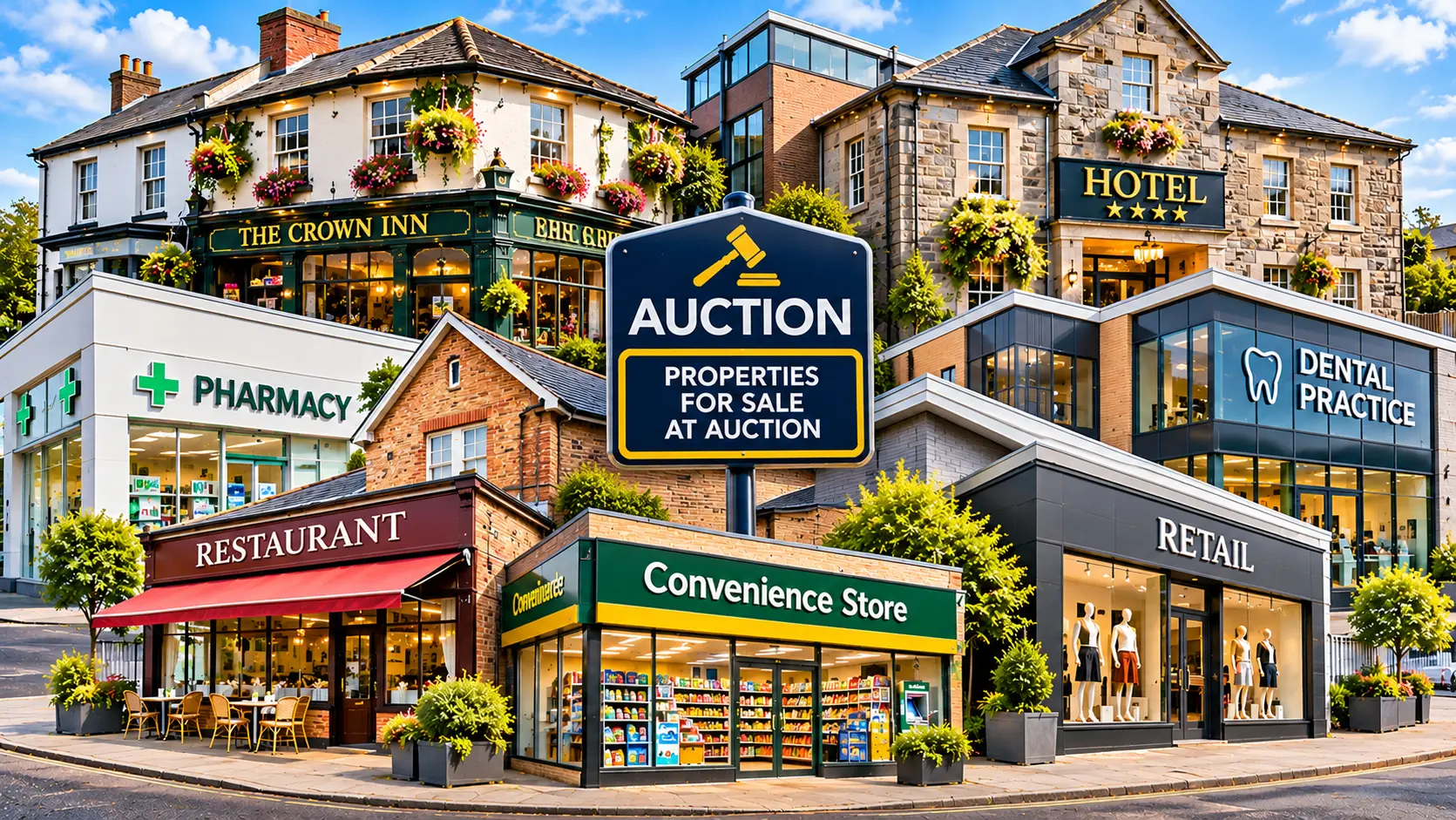
Pubs, shops, offices, industrial units, hotels and care homes regularly sell at property auctions, often at keen prices. For a business owner who wants to stop renting and own the premises they trade from, an auction can be the quickest route to the keys.
It is also the least forgiving. At a traditional auction, the fall of the hammer is exchange of contracts. You are legally bound, you pay a deposit that day, and you must complete on the date in the contract, usually around 28 days later. Miss it and you can lose your deposit. These are the questions worth asking before you bid.
1. Which kind of auction is it?
| Comparison | Traditional (unconditional) auction | Modern method (conditional) auction |
|---|---|---|
| Legally bound | At the fall of the hammer | At exchange, after the auction |
| Paid on the day | Deposit, usually 10% (often with a minimum), plus fees | A non-refundable reservation fee |
| Time to complete | Usually around 28 days, or as the contract states | Typically 28 days to exchange and 28 more to complete |
| If you pull out | You can lose your deposit and face further claims | You lose the reservation fee |
Timescales vary between auction houses and lots. Always check the special conditions of sale for the actual completion date.
2. Before you bid
- —Have you read the legal pack with your solicitor? It contains the title, searches, leases and special conditions. Problems found after the hammer are yours.
- —Have you surveyed the building? Arrange a survey before the sale. Commercial buildings can hide expensive roof, structure, asbestos and services issues.
- —Will it suit your business? Check planning use class, licences (a premises licence for a pub, registration for a care home), parking, access and any restrictive covenants.
- —Is it vacant or tenanted? If someone occupies part of it, read the leases closely.
- —What does the guide price mean? Guide prices can be well below the final price. Base your limit on value, not the guide.
3. The costs beyond the price
- —Auctioneer's buyer's fee. Many auction houses charge a fixed buyer's fee on the day.
- —Seller's costs. Special conditions sometimes require the buyer to pay the seller's legal or search costs.
- —VAT. If the seller has opted to tax the building, 20% VAT may be added to the price, unless the sale qualifies as a transfer of a going concern.
- —Stamp duty. Non-residential Stamp Duty Land Tax applies in England and Northern Ireland, with LBTT in Scotland and LTT in Wales.
- —Finance costs. Lender arrangement fees, valuation and legal fees all come on top.
An illustrative example for freehold trading premises in England, bought by a company at a traditional auction, with no VAT on the price:
| Item | When paid | Amount |
|---|---|---|
| Deposit (10%) | Auction day | £40,000 |
| Auctioneer's buyer's fee, incl. VAT (illustrative) | Auction day | £1,800 |
| Survey | Before the auction | £1,500 |
| Seller's costs under special conditions (illustrative) | Completion | £1,500 |
| Legal fees and searches, incl. VAT (illustrative) | Completion | £3,600 |
| Balance of the price | Completion | £360,000 |
| Stamp Duty Land Tax at current non-residential rates | Within 14 days of completion | £9,500 |
| Total | £417,900 |
If VAT were charged on the price, a further £80,000 would be due at completion. Check the figures for your lot with your solicitor and accountant.
4. The money
- —Is your finance approved before you bid? A lender needs time to value the property and review the legal pack. Within a 28-day deadline, there is no time to start from scratch.
- —What if the valuation comes in low? A lender lends against its own valuation, not your winning bid. Any shortfall has to come from you.
- —Where is the deposit coming from? The deposit on the day usually comes from your own funds.
- —Is bridging finance the answer? Short-term bridging loans are often used to complete within the auction deadline, then repaid with a longer-term commercial mortgage.
- —Bought it with cash? You may be able to release capital from premises bought at auction in the last six months, subject to lender approval.
5. After the hammer
- —Insure it from exchange. At a traditional auction, the building is usually your risk from the fall of the hammer.
- —Instruct your solicitor straight away. The completion clock is already running.
- —Plan the handover. Utilities, business rates, licences and any refurbishment should be lined up for completion day.
Buying the business too?
If you are buying a trading business as a going concern, with its customers, staff and goodwill, rather than an empty building, iLendi Capital arranges the finance for that. See Buying a Freehold Business: Things Worth Thinking About and The Costs of Buying a Freehold Business.
Finance arranged before auction day
Our sister brand, Hammer Ready, arranges finance for business property bought at auction, from pubs, hotels and care homes to shops, offices and industrial units you trade from. It can help you get pre-approved before you bid, fund a lot you have just won before the completion deadline, or release capital from premises you bought outright in the last six months.
Hammer Ready works with limited companies, partnerships, LLPs, sole traders and PLCs, on amounts from £26,000 to £100 million. There is no broker fee, and all finance is subject to status and lender approval.
iLendi Capital and Hammer Ready are trading styles of MBA Capital Partners Limited. We are a commercial finance broker, not a lender, and arrange business finance that is not regulated by the FCA. All finance is subject to status. This article is general information, not tax or legal advice. Tax rates checked November 2026.
Keep reading
The Buying Process
Leasehold Business Due Diligence Checklist
Planning to buy an existing leasehold business? A few things worth thinking about — thirty questions across six areas, from the lease itself to the people who come with it.
5 min readBuying at Auction
Buying Business Assets at Auction: Things Worth Thinking About
That speed can mean real savings, sometimes a fraction of the new price.
7 min readBuying at Auction
Buying Plant & Machinery at Auction: Things Worth Thinking About
The catch is that an auction gives you no second chances.
7 min read