Buying at Auction
Buying Business Assets at Auction: Things Worth Thinking About
By Raphael Ramani, Acquisition Finance Specialist · Last reviewed · 7 min read
That speed can mean real savings, sometimes a fraction of the new price.
02
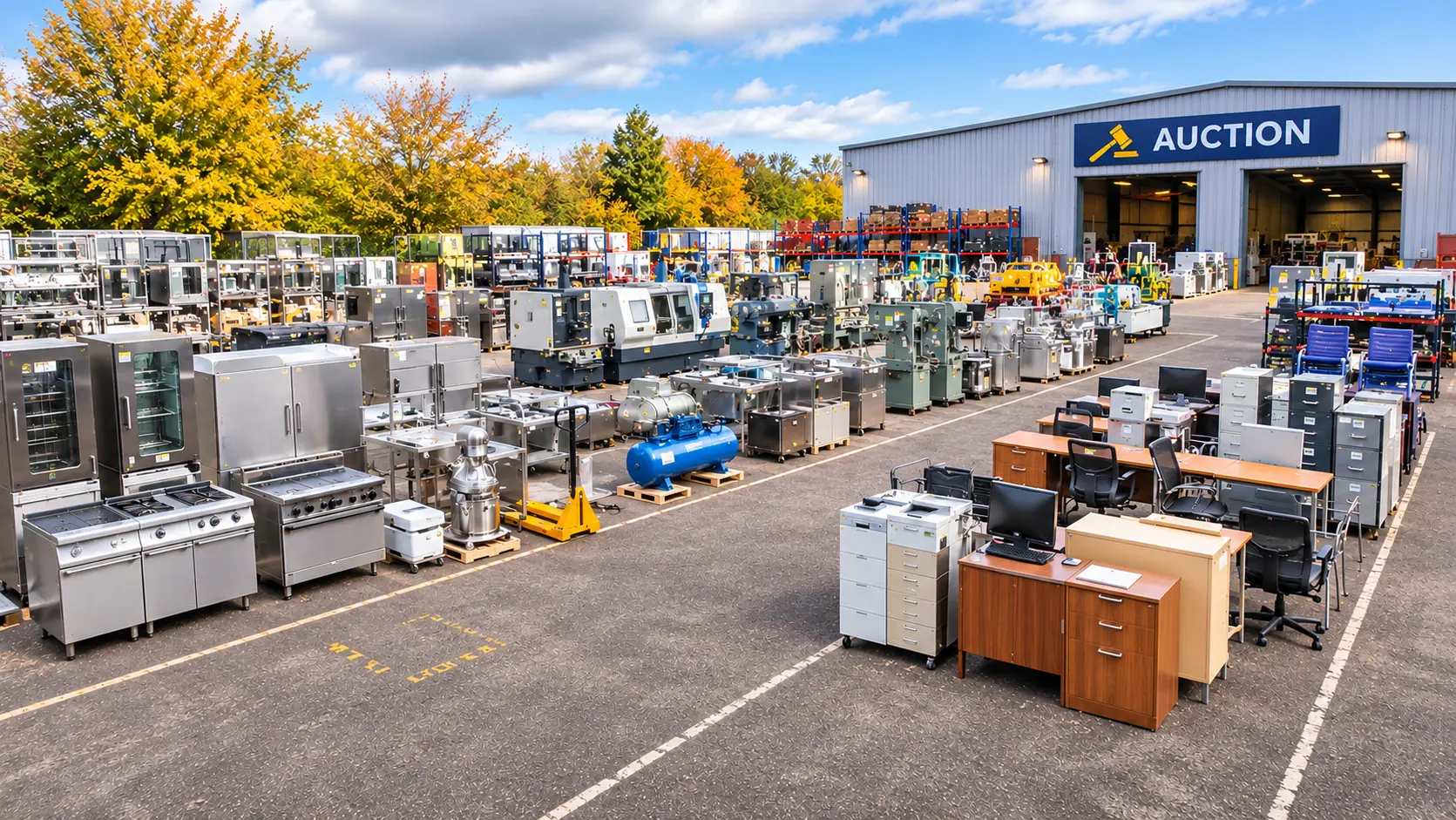
Commercial kitchens, workshop tools, forklifts, shop fittings, compressors and stock all come up at auction every week. Many come from businesses closing down, relocating or upgrading, and some from insolvencies, where an insolvency practitioner needs a quick sale.
That speed can mean real savings, sometimes a fraction of the new price. It also means you buy as seen, with little or no comeback, on a tight payment deadline. These are the questions worth asking before you bid.
1. Before the sale
- —What does the equipment cost new, and second-hand from a dealer? You need both figures to know whether the auction price is a bargain.
- —Who is selling, and why? A business closure, an upgrade and an insolvency sale each carry different risks and different levels of information.
- —How are the lots split? A kitchen or workshop may be sold item by item. Losing one key lot can leave you with an incomplete set.
- —Have you read the conditions of sale? Note the buyer's premium, payment deadline and removal window, which can be very short at closure sales.
2. The equipment itself
- —Can you see it working? Equipment that has been switched off for months may not start again. Ask whether it can be powered up at viewing.
- —Will it fit, and will it run on your supply? Check dimensions, three-phase or single-phase power, gas type and ventilation.
- —Is it still supported? Check that spare parts and service engineers are available for older or imported brands.
- —For stock: is it in date, complete and saleable? Count it if you can, and check expiry dates and condition.
3. The paperwork and the law
- —Expect little or no warranty. Insolvency practitioners rarely give guarantees about assets they sell, so your inspection is your protection.
- —Is anything subject to finance or retention of title? Leased or unpaid-for items should not be in the sale, but ask the auctioneer if in doubt.
- —What will it take to make it compliant? Gas appliances need fitting and certifying by a Gas Safe registered engineer. Forklifts need a current thorough examination. Electrical items may need safety testing.
4. The real cost
Online closure and liquidation sales often carry higher buyer's premiums than traditional machinery sales, and VAT usually applies to both the hammer price and the premium. Removal can also be expensive, especially for fixed equipment that needs a specialist to disconnect it.
An illustrative example for a commercial kitchen bought by a VAT-registered company:
| Item | Amount |
|---|---|
| Hammer prices across all lots | £35,000 |
| Buyer's premium (illustrative 15%) | £5,250 |
| VAT at 20% on hammer prices | £7,000 |
| VAT at 20% on buyer's premium | £1,050 |
| Disconnection, removal and reinstallation, incl. VAT | £3,000 |
| Total to pay | £51,300 |
The VAT is usually reclaimable for a VAT-registered business, but it has to be funded first. Check the real figures for your sale, and ask your accountant about VAT.
5. The money
- —Can you pay within the deadline? Closure sales may want payment within a day or two, and removal within a few days after that.
- —Is your finance agreed before you bid? Arranging it in advance means you know your limit and can move as soon as you win.
- —Are you buying several lots? A lender can often fund a group of purchases together as one package, which is easier than financing each item separately.
- —What will a lender fund? Equipment with a clear resale value is easiest to finance. Items such as stock or small tools may be harder to fund on their own, so a broker can help structure the package.
6. After the hammer
- —Is it insured from the fall of the hammer? Lots usually become your risk immediately, including during removal.
- —Who is taking it out? Book a removal team that can safely disconnect and lift the equipment within the deadline.
- —When will it be earning? Allow time for installation, certification and any repairs before it is in use.
Finance arranged before auction day
Our sister brand, Hammer Ready, arranges finance for business assets bought at auction, from catering and workshop equipment to forklifts, stock and shop fittings. It can help you get pre-approved before you bid, fund lots you have just won, or release cash from assets you bought outright in the last six months.
Hammer Ready works with limited companies, partnerships, LLPs, sole traders and PLCs, on amounts from £26,000. There is no broker fee, and all finance is subject to status and lender approval.
iLendi Capital and Hammer Ready are trading styles of MBA Capital Partners Limited. We are a commercial finance broker, not a lender, and arrange business finance that is not regulated by the FCA. All finance is subject to status. This article is general information, not tax or legal advice.
Keep reading
Buying at Auction
Buying Plant & Machinery at Auction: Things Worth Thinking About
The catch is that an auction gives you no second chances.
7 min readBuying at Auction
Buying Business Property at Auction: Things Worth Thinking About
It is also the least forgiving.
9 min readAcquisition Finance and Loans
The Costs of Buying a Leasehold Business
The price you agree with the seller — the lease premium — is only part of it. Rent deposits, landlord's fees, stock and the cash to survive your first month: the honest full list, with a worked example.
10 min read