Buying at Auction
Buying Plant & Machinery at Auction: Things Worth Thinking About
By Raphael Ramani, Acquisition Finance Specialist · Last reviewed · 7 min read
The catch is that an auction gives you no second chances.
01
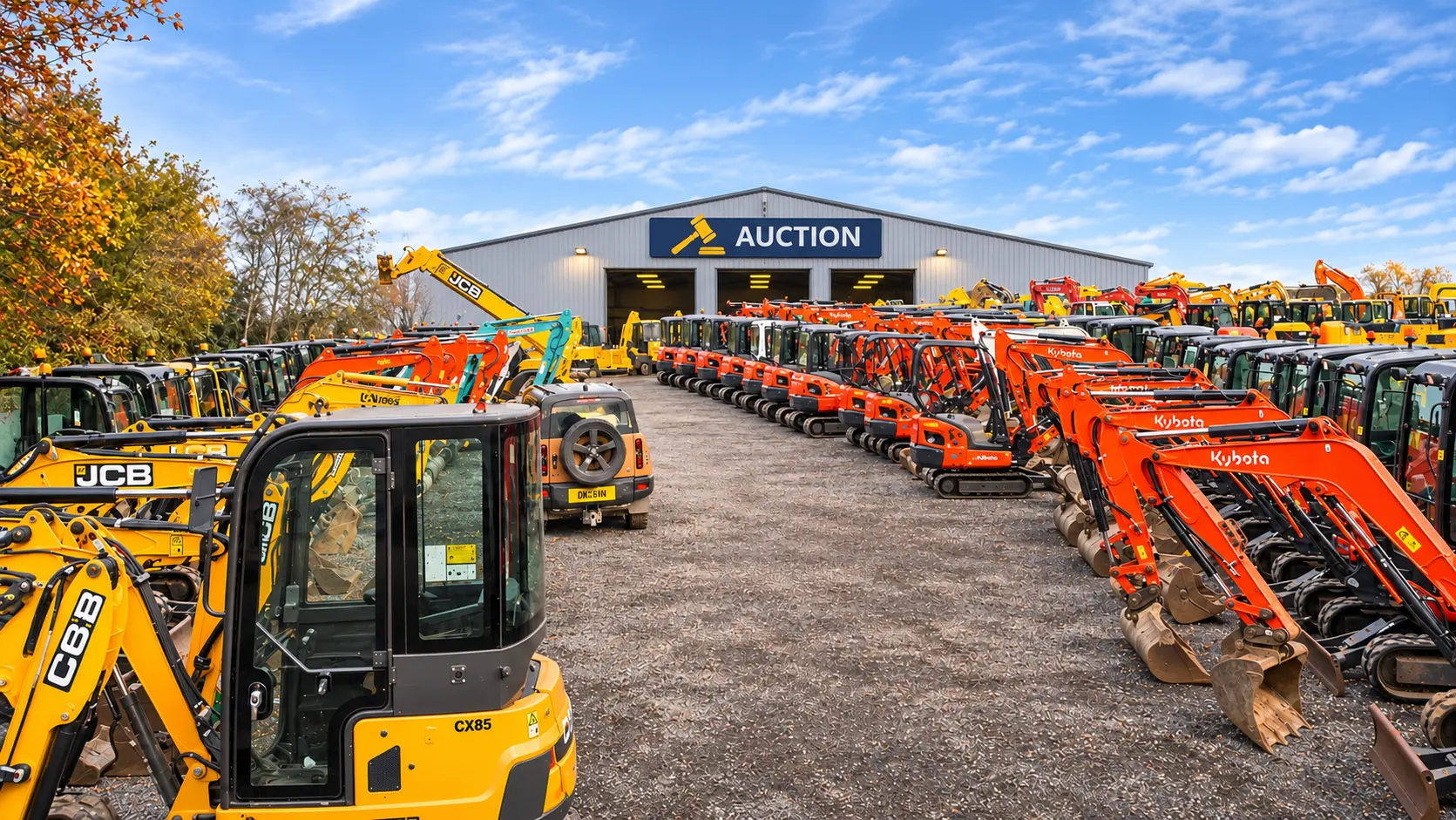
Auctions are one of the best places to buy excavators, dumpers, rollers, generators and telehandlers for less than dealer prices. Fleet disposals, contract wind-downs and insolvencies put good machines in front of buyers every week, online and on site.
The catch is that an auction gives you no second chances. When the hammer falls, you have bought the machine, faults and all, and the auctioneer will want paying within days. The buyers who do well are the ones who did their homework before the sale. These are the questions worth asking first.
1. Before the sale
- —Do you know exactly what you need? Machine size, attachments, hours and spec matter more than the badge. A cheap machine in the wrong class is not a bargain.
- —What do comparable machines sell for? Check recent hammer prices for the same make, model, year and hours, not dealer asking prices.
- —Have you read the conditions of sale? Every auctioneer has its own buyer's premium, payment deadline, collection window and storage charges. Read them before you register.
- —What is your walk-away price? Set it before bidding starts, including every cost below, and write it down.
2. The machine itself
- —Can you inspect it in person? Most sales offer viewing days. If you can't go, can someone you trust go for you?
- —Does it start, run and work under load? Check hydraulics for leaks and drift, the undercarriage or tyres, pins and bushes, and any smoke on start-up.
- —Are the hours genuine? Compare the meter with the machine's overall wear, and ask for service records.
- —What attachments are included? Buckets, breakers and quick hitches are often sold as separate lots.
- —Is it compliant? For lifting equipment, ask whether a current LOLER thorough examination is in place, or budget for one.
3. The paperwork
- —Is the title clear? Ask whether the machine is free of outstanding finance. Reputable auctioneers check, but it is worth confirming.
- —Is the serial number legible and does it match the documents? Plant theft is common, and many buyers run a check against a plant theft register.
- —Is VAT charged on the hammer price? Catalogues usually mark VAT-able lots. This changes your total cost considerably.
4. The real cost
The hammer price is never the final price. Buyer's premiums vary widely between auction houses, from around 2% to 10% or more, and VAT usually applies to the premium and often to the hammer price too.
An illustrative example for a machine bought by a VAT-registered company:
| Item | Amount |
|---|---|
| Hammer price | £60,000 |
| Buyer's premium (illustrative 5%) | £3,000 |
| VAT at 20% on hammer price | £12,000 |
| VAT at 20% on buyer's premium | £600 |
| Low-loader transport, incl. VAT | £1,800 |
| Total to pay | £77,400 |
A VAT-registered business can usually reclaim the VAT, but it still has to be paid first. That cash-flow gap catches many buyers out. Check the actual premium, VAT position and transport cost for your sale, and speak to your accountant about VAT.
5. The money
- —How will you pay, and by when? Many machinery sales want cleared funds within a day or a few days. A standard lending process rarely moves that fast.
- —Is your finance agreed before you bid? Pre-approval gives you a firm budget and lets you bid with confidence.
- —Which finance type suits you? Hire purchase lets you own the machine at the end. A finance lease keeps upfront costs down. Each treats VAT differently, so ask how it works for your agreement.
- —Did you buy with cash? If you paid from your own funds, you may be able to release that cash later by refinancing the machine, subject to lender approval.
6. After the hammer
- —Is it insured from the moment you win? Lots usually become the buyer's risk at the fall of the hammer, even before you collect.
- —When must it be collected? Storage charges often start after a short window, so book transport before the sale.
- —Will it need servicing before work? Budget for fluids, filters and a full service before it goes on site.
Finance arranged before auction day
Our sister brand, Hammer Ready, specialises in finance for plant and machinery bought at auction. It can help you get pre-approved before you bid, fund a lot you have just won before the payment deadline, or release cash from a machine you bought outright in the last six months.
Hammer Ready works with limited companies, partnerships, LLPs, sole traders and PLCs, on amounts from £26,000. There is no broker fee, and all finance is subject to status and lender approval.
iLendi Capital and Hammer Ready are trading styles of MBA Capital Partners Limited. We are a commercial finance broker, not a lender, and arrange business finance that is not regulated by the FCA. All finance is subject to status. This article is general information, not tax or legal advice.
Keep reading
Buying at Auction
Buying Farm Machinery at Auction: Things Worth Thinking About
Farm sales have their own rhythm.
7 min readBuying at Auction
Buying Vehicles at Auction for Your Business: Things Worth Thinking About
Vehicles also sell fast.
7 min readBuying at Auction
Buying Business Assets at Auction: Things Worth Thinking About
That speed can mean real savings, sometimes a fraction of the new price.
7 min read